Latest Post

Hiển thị các bài đăng có nhãn science. Hiển thị tất cả bài đăng

Thứ Tư, 16 tháng 11, 2016

How do clouds form?

Keep the learning going about by checking out one or more amazing information with a friend or family member: How do clouds form?
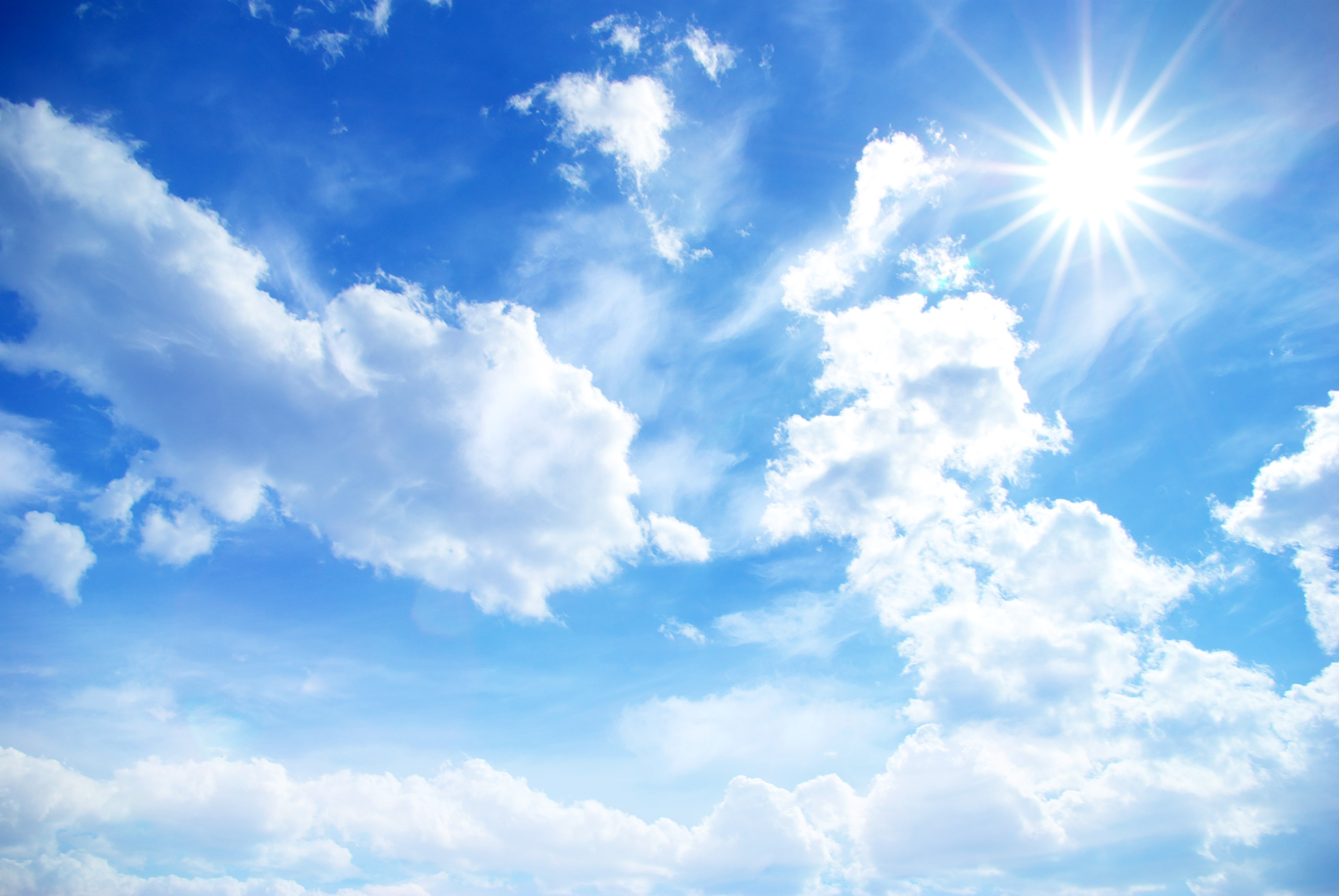

Clouds are made of tiny drops of water or ice crystals that settle on dust particles in the atmosphere. The droplets are so small - a diameter of about a hundredth of a millimetre - that each cubic metre of air will contain 100 million droplets.

Clouds will either be composed of ice or water droplets depending on the height of the cloud and the temperature of the atmosphere. Because the droplets are so small, they can remain in liquid form in temperatures as low as -30 °C. Extremely high clouds at temperatures below -30 °C are composed of ice crystals.

Enjoy our wide range of funny pictures with captions that can make a joyful day.

How do clouds form?

Clouds form when the invisible water vapour in the air condenses into visible water droplets or ice crystals. There is water around us all the time in the form of tiny gas particles, also known as water vapour. There are also tiny particles floating around in the air - such as salt and dust - these are called aerosols.

The water vapour and the aerosols are constantly bumping into each other. When the air is cooled, some of the water vapour sticks to the aerosols when they collide - this is condensation. Eventually, bigger water droplets form around the aerosol particles, and these water droplets start sticking together with other droplets, forming clouds.

Clouds form when the air is saturated and cannot hold any more water vapour, this can happen in two ways:
The amount of water in the air has increased - for example through evaporation - to the point that the air cannot hold any more water.
The air is cooled to its dew point - the point where condensation occurs - and the air is unable to hold any more water.

The warmer the air is, the more water vapour it can hold. Clouds are usually produced through condensation - as the air rises, it will cool and reducing the temperature of the air decreases its ability to hold water vapour so that condensation occurs. The height at which dew point is reached and clouds form is called the condensation level.

Those who loves to discover nature will not want to miss our wide range of factoflife articles.

Image result for cloud

What causes clouds to form?

1. Surface heating - This happens when the ground is heated by the sun which heats the air in contact with it causing it to rise. The rising columns are often called thermals. Surface heating tends to produce cumulus clouds.

2. Topography or orographic forcing - The topography - or shape and features of the area - can cause clouds to be formed. When air is forced to rise over a barrier of mountains or hills it cools as it rises. Layered clouds are often produced this way.

3. Frontal - Clouds are formed when a mass of warm air rises up over a mass of cold, dense air over large areas along fronts. A 'front' is the boundary between warm, moist air and cooler, drier air.

4. Convergence - Streams of air flowing from different directions are forced to rise where they flow together, or converge. This can cause cumulus cloud and showery conditions.

5. Turbulence - A sudden change in wind speed with height creating turbulent eddies in the air.

The range of ways in which clouds can be formed and the variable nature of the atmosphere results in an enormous variety of shapes, sizes and textures of clouds. To find out more about different types of clouds and how you can identify them, read our cloud spotting guide.

Learn all valuable information you wanted about science facts via our articles.

Thứ Hai, 31 tháng 10, 2016

Science facts: Firenados are a thing that happens

Wanna discover amazing science facts: Firenados are a thing that happens. Keep reading on to know

1. Firenados are a thing that happens.

Firenados are fairly self-explanatory and completely terrifying. They are tornadoes that are full of raging hot flames. They occur during wildfires, which, due to all that rising hot air, create their own massive winds, which can pull more oxygen into the fire, making them stronger as they pull the flames high into the sky.

2. The tallest known cliff in the Solar System is on Uranus’ tiny moon Miranda.


Uranus’ tiny moon Miranda has a cliff named named Verona Rupes that is estimated to be up to 10 times the depth of the Grand Canyon. Due to Miranda’s low gravity and the height of the cliff, it would take a full 12 minutes to jump off of this thing. It remains unclear why such a small object would have such a ragged surface.

3. There was a time when dragonflies the size of seagulls terrorized the Earth.


These bad boys were named Meganeura and were closely related to living dragonflies. They lived around 300 million years ago and preyed on smaller insects. How and why such large insects could develop at that time is still an open question.

4. All the planets of the Solar System could theoretically fit in the space between Earth and the Moon.


The average distance between the Earth and the Moon is 239,200 miles. The total distance covered by the the diameter of all the planets stacked next to each other is 233,865 miles. Plenty of room to spare! This is one of the most amazing facts ever.

5. An entirely new system in the human body was discovered thanks to weed.


It’s called the endocannabinoid system, and it’s in yo brain. It just so happens that the chemicals in pot target this system exclusively. In fact, it was our understanding of those plant-based chemicals that led to the discovery of the endocannabinoid system in the mid-1990s. It plays a role in pain, learning, appetite, and a whole variety of other things, too.

6. Male koalas have two penises and female koalas have three vaginas.

The males of most koala species have a bifurcated penis — essentially that means they have two penises. A female koala has two “lateral vaginas” which transport semen, and a third “medial” vagina, which their young travel through during birth.

7. Russia is bigger than Pluto.


When it comes to surface area, Russia takes up a whopping 6.6 million square miles. Pluto, on the other hand, has a surface area of only 6.4 million square miles.

Check out for more cool, random, weird but true, crazy, fun, amazing facts, fact of life, fact of the day, and funny videos, video clips, funny pics, images, photos.

Thứ Năm, 27 tháng 10, 2016

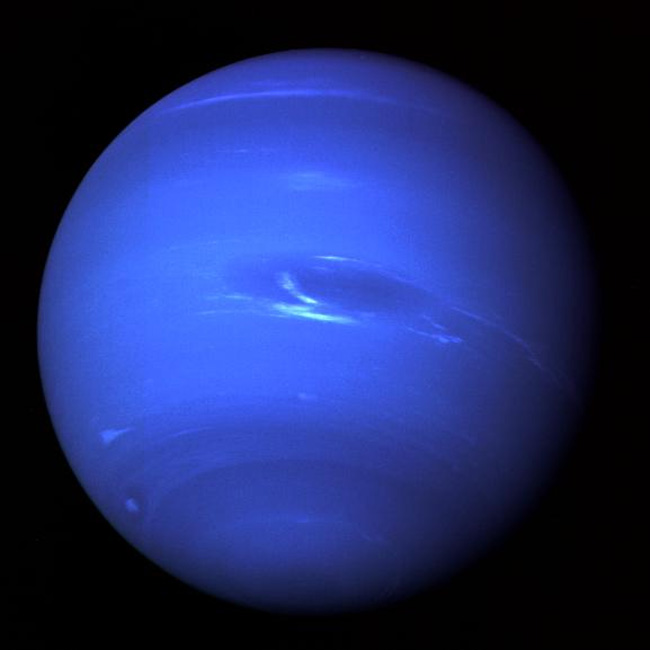
Science facts: What you need to know about Neptune planet

Enjoy our rich source of science facts that can help you widen your knowledge. And now it's the time for Neptune facts. Neptune is the eighth planet from the Sun making it the most distant in the solar system. This gas giantplanet may have formed much closer to the Sun in early solar system history before migrating to its present position.


Fact #1

Neptune is the most distant planet in the solar system.

Fact #2

Neptune was originally called Le Verrier’s Planet (named after the man who discovered it, Urbain Le Verrier. There were a number of suggestions about what to call this planet. And in the end, the man who discovered this planet chose the name Neptune.

Fact #3

Neptune has 13 known moons. The largest moon is Triton, one of the coldest places known within our Solar System. The temperature on the surface of this moon can dip down to an amazing -235 degree Celsius.

Fact #4

A Neptunian year lasts for 164.79 Earth years. Because of Neptune distance from the Sun, It takes 164.79 Earth years to orbit the Sun once. Neptune has a similar tilt on its axis as Earth does. This means that it has similar seasons as our does, only they last much, much longer. An average summer on Neptune would last for 41 years. This might be one of the most amazing facts in total that can better your knowledge.

Fact #5

Each day on Neptune lasts for around 16 hours, and 6.5 minutes.


Fact #6

The strongest winds that have ever been recorded in the Solar System have come from Neptune, with speeds at 2,000 kilometers per hour.

Fact #7

Some people believe that Pluto was once a moon of Neptune that broke away from Neptune’s gravitational pull.

Fact #8

Like Saturn, Neptune has three rings orbiting the planet. Two are fairly thick, while the third is very faint ring. These rings are smaller than the rings of Saturn and are made of dust. Do you believe that this is the truth, not just jokes for fun?


Fact #9

Although Neptune is smaller in diameter than Uranus, it has a greater mass. Neptune’s mass is 17 times greater than that of Earth’s, whilst Uranus is only 14.5 times greater.

Thứ Sáu, 21 tháng 10, 2016

Human death and its reason

Keep reading to know the answer for interesting science facts on human death. Let's jump right in!

Image result for why human die

Organisms grow old because nature doesn't need them any more. If the purpose of life is to procreate and replicate successfully - this is the logic of the so-called selfish gene theory - then it helps to stay healthy long enough to generate children and provide them with food. Immortality arrives with your offspring, and is only guaranteed when all your children also have children. weird facts

Different species place their bets on life's roulette wheel in different ways. If you're an oyster or a salmon or a fruit fly, the process is over quickly enough: lay a huge number of eggs somewhere safely and die. If you're a tigress or a dolphin, the process isn't so simple: you have to bear the young, rear them, provide food on a daily basis and guide them to maturity. If you are a human, you get a little bit of extra grace: you can be useful to your grandchildren, so there is some evolutionary pressure to stay alive that little bit longer. And then there's the bonus: being human, you have all the resources of society and technology to keep you safe from predators and healthy and active for just a bit longer.

But sooner or later, the biological clock begins to run down. Cells that had faithfully renewed themselves begin to fail. A heart that pounded away in perfect synchrony begins to run down after a couple of billion beats. Joints that withstood rugby, football, rock'n'roll and the gymnasium treadmill start to creak. Skin that bloomed in the spring sunshine begins to weather and flake in life's autumn. Brains shrink, spines curve, eyes begin to fail, hearing goes, organs become cancerous, bones begin to crumble and memory perishes.


Ageing seems inevitable but, for some scientists, it isn't obvious why this process is inexorable. Human chromosomes seem to arrive with their own lifespan timing devices called telomeres, but precisely why and how telomeres are linked to ageing is still not understood. There are genes that seem to to dictate survival rates in fruit flies, nematode worms and mice, and these genes almost certainly exist in humans, but what works in an insect or even another mammal may not be much help to a human anxious to hang around a bit longer. Even so, in the last half of the 20th century, life expectancies were increasing everywhere in the developed and developing world, wherever there was appropriate sanitation, nutrition, education and medical care; and small groups of scientists had begun to ask whether life could be extended indefinitely.

Human death and its reason

Keep reading to know the answer for interesting science facts on human death. Let's jump right in!

Image result for why human die

Organisms grow old because nature doesn't need them any more. If the purpose of life is to procreate and replicate successfully - this is the logic of the so-called selfish gene theory - then it helps to stay healthy long enough to generate children and provide them with food. Immortality arrives with your offspring, and is only guaranteed when all your children also have children. weird facts

Different species place their bets on life's roulette wheel in different ways. If you're an oyster or a salmon or a fruit fly, the process is over quickly enough: lay a huge number of eggs somewhere safely and die. If you're a tigress or a dolphin, the process isn't so simple: you have to bear the young, rear them, provide food on a daily basis and guide them to maturity. If you are a human, you get a little bit of extra grace: you can be useful to your grandchildren, so there is some evolutionary pressure to stay alive that little bit longer. And then there's the bonus: being human, you have all the resources of society and technology to keep you safe from predators and healthy and active for just a bit longer.

But sooner or later, the biological clock begins to run down. Cells that had faithfully renewed themselves begin to fail. A heart that pounded away in perfect synchrony begins to run down after a couple of billion beats. Joints that withstood rugby, football, rock'n'roll and the gymnasium treadmill start to creak. Skin that bloomed in the spring sunshine begins to weather and flake in life's autumn. Brains shrink, spines curve, eyes begin to fail, hearing goes, organs become cancerous, bones begin to crumble and memory perishes.


Ageing seems inevitable but, for some scientists, it isn't obvious why this process is inexorable. Human chromosomes seem to arrive with their own lifespan timing devices called telomeres, but precisely why and how telomeres are linked to ageing is still not understood. There are genes that seem to to dictate survival rates in fruit flies, nematode worms and mice, and these genes almost certainly exist in humans, but what works in an insect or even another mammal may not be much help to a human anxious to hang around a bit longer. Even so, in the last half of the 20th century, life expectancies were increasing everywhere in the developed and developing world, wherever there was appropriate sanitation, nutrition, education and medical care; and small groups of scientists had begun to ask whether life could be extended indefinitely.

Human death and its reason

Keep reading to know the answer for interesting science facts on human death. Let's jump right in!

Image result for why human die

Organisms grow old because nature doesn't need them any more. If the purpose of life is to procreate and replicate successfully - this is the logic of the so-called selfish gene theory - then it helps to stay healthy long enough to generate children and provide them with food. Immortality arrives with your offspring, and is only guaranteed when all your children also have children. weird facts

Different species place their bets on life's roulette wheel in different ways. If you're an oyster or a salmon or a fruit fly, the process is over quickly enough: lay a huge number of eggs somewhere safely and die. If you're a tigress or a dolphin, the process isn't so simple: you have to bear the young, rear them, provide food on a daily basis and guide them to maturity. If you are a human, you get a little bit of extra grace: you can be useful to your grandchildren, so there is some evolutionary pressure to stay alive that little bit longer. And then there's the bonus: being human, you have all the resources of society and technology to keep you safe from predators and healthy and active for just a bit longer.

But sooner or later, the biological clock begins to run down. Cells that had faithfully renewed themselves begin to fail. A heart that pounded away in perfect synchrony begins to run down after a couple of billion beats. Joints that withstood rugby, football, rock'n'roll and the gymnasium treadmill start to creak. Skin that bloomed in the spring sunshine begins to weather and flake in life's autumn. Brains shrink, spines curve, eyes begin to fail, hearing goes, organs become cancerous, bones begin to crumble and memory perishes.


Ageing seems inevitable but, for some scientists, it isn't obvious why this process is inexorable. Human chromosomes seem to arrive with their own lifespan timing devices called telomeres, but precisely why and how telomeres are linked to ageing is still not understood. There are genes that seem to to dictate survival rates in fruit flies, nematode worms and mice, and these genes almost certainly exist in humans, but what works in an insect or even another mammal may not be much help to a human anxious to hang around a bit longer. Even so, in the last half of the 20th century, life expectancies were increasing everywhere in the developed and developing world, wherever there was appropriate sanitation, nutrition, education and medical care; and small groups of scientists had begun to ask whether life could be extended indefinitely.

Thứ Tư, 5 tháng 10, 2016

Ocean color and the explaination

Do you know about ocean color and the explaination for this amazing science facts? See the best answer as belows:


"The ocean looks blue because red, orange and yellow (long wavelength light) are absorbed more strongly by water than is blue (short wavelength light). So when white light from the sun enters the ocean, it is mostly the blue that gets returned. Same reason the sky is blue."
In other words, the color of the ocean and the color of the sky are related but occur independently of each other: in both cases, the preferential absorption of long-wavelength (reddish) light gives rise to the blue. Note that this effect only works if the water is very pure; if the water is full of mud, algae or other impurities, the light scattered off these impurities will overwhelm the water's natural blueness.
Gross then asks, "So why are sunsets orange?" Several people to wrote in to correct or clarify that comment.
Perhaps the most helpful response came from Michael Kruger of the department of physics at the University of Missouri. He sent the following reaction:
"The answer to why the sky is blue isn't quite correct although there are many funny pics to prove it. The sky is blue not because the atmosphere absorbs the other colors, but because the atmosphere tends to scatter shorter wavelength (blue) light to a greater extent than longer wavelength (red) light. Blue light from the sun is scattered every which way, much more so than the other colors, so when you look up at the daytime sky you see blue no matter where you look. This scattering is called 'Rayleigh scattering'; the amount of scattering goes as the frequency of the light to the 4th power. By the way, this effect is most prevalent when the particles that do the scattering are smaller than the wavelength of light, as is the case for the nitrogen and oxygen molecules in the atmosphere.
"Now we are in a position to figure out why sunsets are reddish! When the sun is setting, the light that reaches you has had to go through lots more atmosphere than when the sun is overhead, hence the only color light that is not scattered away is the long wavelength light, the red.
"We can also answer why clouds, milk, powdered sugar and salt are white. The particles in these materials that are responsible for scattering the light are larger than the wavelength of light. Consequently, all colors of light are scattered by more or less the same amount. Much of the scattering in milk is due to the lipids (fat). If you take out the fat, the milk will not scatter as much light; that is probably why skim milk looks the way it does.


Check out more facts at factoflife to get more.